
Synthesis and high-temperature materials work.
Distinct from the broader academic research relationship — this is about particle size, crystallinity and phase purity, not just chemical yield.
Direct, volumetric heating — not conduction from a hot surface.
Microwave energy heats reactants directly and volumetrically rather than by conduction from a hot surface, giving genuinely instant-on/instant-off control and reducing the thermal gradients that drive unwanted side reactions and inconsistent particle formation. This matters specifically for materials synthesis, where particle size distribution, crystallinity and phase purity — not just chemical yield — determine whether the material performs as intended.
Across research and scale-up.
Zeolites
High-temperature synthesis; Phoenix furnace (to 1200 °C) and MARS 6 Synthesis both applicable.
Quantum dots, metal oxides, nitride powders
Discover 2.0 research-scale synthesis.
Metal-organic frameworks (MOFs)
Discover 2.0.
Gold & silver nanomaterials, nanocomposites
Discover 2.0.
Lithium-ion battery materials
Cathode/electrode material synthesis — a growing research interest given South Africa's manganese, nickel and regional lithium resource base.
Novel monomers & polymers
Research-scale synthesis via Discover 2.0, feeding into Plastics & Polymers downstream.
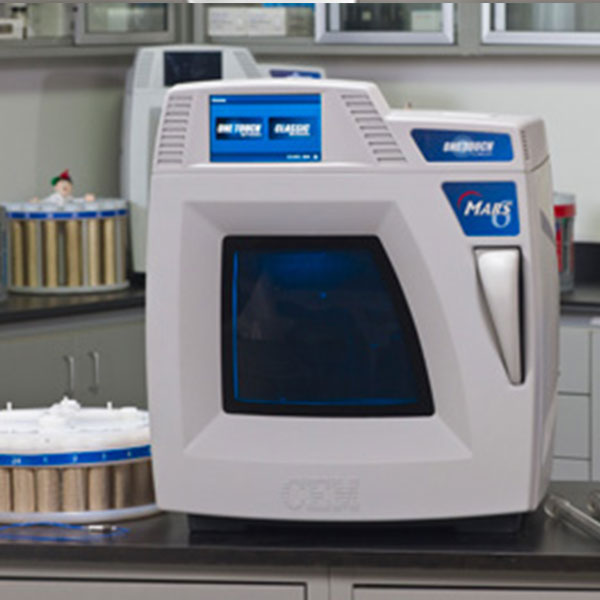
Supporting South Africa's materials synthesis research community.
- · University materials science and chemical engineering departments
- · National research and mineral-beneficiation institutions
- · Emerging battery and energy-storage materials developers
Named client references appear on this site only where written permission has been given.
From research scale to scale-up.
Discover 2.0
Research-scale synthesis, the primary instrument for this segment. CoolMate and Gas Addition accessories cover temperature-sensitive and gas-phase chemistry.
View product →MARS 6 Synthesis
Scale-up to 5 L batch or 12-vessel parallel synthesis.
View product →Phoenix BLACK
High-temperature reactions to 1200 °C, including zeolite synthesis.
View product →South African university materials science and chemical engineering departments — the kind of institution this segment includes spans research groups at universities such as Wits, UP, Stellenbosch and UJ, national research organisations, and emerging local battery and energy storage materials developers working from South Africa's manganese, nickel and regional lithium resource base.