

The company that invented microwave digestion.
Matthews, North Carolina, USA. MAD Technology has been the appointed South African agent for CEM Corporation since November 2000 — over 25 years of continuous representation.
CEM invented the category it now leads.
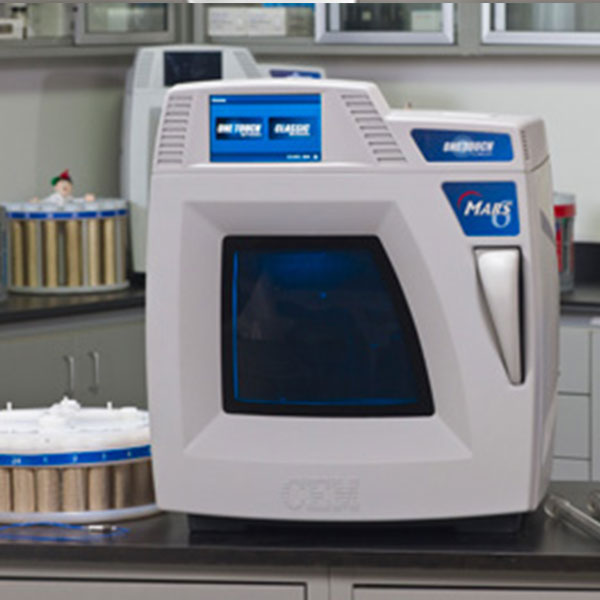
CEM developed microwave digestion in collaboration with the US National Bureau of Standards — now NIST — in the mid-1980s, receiving an IR-100 award for the invention. Its first system was used to digest soil, plant and fish tissue at US EPA Superfund sites: a category born out of a genuine environmental-testing need, not a laboratory curiosity looking for a market.
Because CEM systems were the ones available when USEPA, AOAC and USP methods were being developed from the 1980s onward, a large body of standard methodology was validated on CEM hardware. A laboratory buying CEM today is buying the platform much of the method library was written on.
CEM's application infrastructure reflects a company that still treats chemistry, not just hardware, as its product: three dedicated on-site application laboratories in North Carolina, an open-factory policy for customer visits, and a large published library of application notes covering nearly every matrix and application in the catalogue. CEM offers to run sample trials for prospective customers before they buy.
45-plus years leading the field.
CEM Corporation founded in Matthews, North Carolina.
Develops microwave digestion in collaboration with the US National Bureau of Standards (now NIST); receives an IR-100 award for the invention. First systems used at US EPA Superfund sites.
USEPA, AOAC and USP standard methods are developed and validated on CEM instruments during the period CEM was the only player in the market.
Acquires the instrumentation and robotics lines of Intavis Bioanalytical Instruments (Cologne, Germany), extending into peptide synthesis and automation.
Distributes through authorised representatives in over 50 countries; ISO certified; privately held, with TA Associates Management having invested in the company. MAD Technology has been its appointed South African agent since November 2000.
At a glance.
| Founded | 1978 |
| Headquarters | Matthews, North Carolina, USA |
| Ownership | Privately held; TA Associates Management has invested in the company |
| Subsidiaries | United Kingdom, France, Germany, Italy, Ireland, Japan |
| Distribution | Over 50 countries via authorised representatives |
| Quality certification | ISO certified |
| 2020 acquisition | Instrumentation & robotics lines of Intavis Bioanalytical Instruments (Cologne, Germany) |
| MAD's territory | South Africa (appointed agent) |
The category originator, still setting the pace.
CEM invented the category
Developed microwave digestion with the US National Bureau of Standards in the mid-1980s, earning an IR-100 award for the invention.
Official methods were written on CEM hardware
USEPA, AOAC and USP methods were validated on CEM systems from the 1980s onward — a large body of standard methodology tied to the platform.
Deep applications infrastructure
Three dedicated on-site application laboratories in North Carolina, an open-factory policy, and a large published library of application notes. CEM offers to run sample trials for prospective customers.
How CEM organises its catalogue.
CEM organises its range by application, industry and instrument type — reflecting how the market actually buys.
By Application
Microwave Digestion · Microwave Solvent Extraction · Microwave Ashing · Moisture and Solids Analysis · Fat Analysis · Protein Analysis · Hydrolysis · Microwave Synthesis · Peptide Synthesis · Preparative HPLC · Sulfated Ashing · Protein Digestion (Proteomics)
By Industry (CEM's current emphasis)
Animal Feeds · Cannabis · Chemical Manufacturing · Dairy · Meat and Poultry · Peptides · PFAS · Processed Foods · Wastewater
The instruments MAD supplies from CEM.
Arrange a CEM sample trial
CEM maintains three dedicated application laboratories in North Carolina and will run your actual sample through MAD Technology.
Talk to our applications team