South Africa's laboratory market, shaped by mining more than any other sector.
The world's largest platinum group metal reserves, major gold, chrome, manganese, vanadium, iron ore and coal operations — every mine, concentrator, smelter and refinery runs continuous elemental analysis.
Where testing happens across the value chain.
Exploration geochemistry
Thousands of drill core and soil samples; cost per sample and throughput are everything.
Grade control
Daily analysis to decide what goes to the plant, within the shift.
Metallurgical accounting
Mass balance across feed, concentrate and tailings, feeding financial reporting.
Refinery process control
PGE and base metal streams, high precision at high concentration.
Product certification
The assay on which the metal is sold — accuracy and traceability are commercial requirements.
Environmental & occupational
Water, soil, dust and tailings compliance; personal air-filter samples under the Mine Health and Safety Act.
Some of the most difficult matrices in analytical chemistry.
- · Silicate rocks require hydrofluoric acid — the only reagent that attacks the silicon-oxygen framework
- · Chromite is notoriously refractory — standard nitric acid digestion does not complete it
- · Sulfide ores need oxidising conditions
- · PGM-bearing materials typically require aqua regia
- · Automotive catalyst and spent catalyst are among the hardest matrices in elemental analysis
- · Black mass from recycled lithium-ion batteries is an emerging matrix for PGM and base metals laboratories
The frameworks South African mining laboratories work within.
SANS 241 (drinking water quality, relevant to mine-water compliance) · National Water Act and Water Use Licences · National Environmental Management Act · Mine Health and Safety Act · ISO/IEC 17025 / SANAS accreditation · USEPA 3051A, 3052 · EN ISO 54321.
Verified performance data for South African gold assay laboratories.
Method: aqua regia digestion only, 2 g sample to 50 mL, duplicate preparations, no further dilution. Gold measured at 267.595 nm. Calibration 0.025–20 ppm, R² = 1.0000, LOD 17.3 ppb.
| CRM | Certified (ppm) | Recovery 1 | Recovery 2 |
|---|---|---|---|
| 238 | 2.95 | 101% | 96% |
| 242 | 8.33 | 83% | 87% |
| 255b | 4.08 | 94% | 92% |
| 256b | 7.58 | 100% | 94% |
| 257b | 14.17 | 103% | 109% |
The OREAS certified values are consensus figures derived from multiple preparation routes — lead fire assay, four-acid digestion, aqua regia and cyanide leach. This study used aqua regia preparation only, a partial-extraction technique for gold; variation in recovery reflects the preparation chemistry, not instrument performance.
Source: Radom Corporation, MICAP-OES 1000 brochure (MICAP-078-23-Rev.B).
A 30 kg spectrometer, deployable where a conventional ICP-OES cannot go.
With no chiller and no argon requirement, the MICAP-OES 1000 can screen core samples on location, meaning results can be determined more quickly and more samples collected across an area to build a comprehensive map of potential yield — a materially different operating model from shipping core to a central laboratory for exploration geochemistry, where turnaround drives drilling decisions.
Honest positioning. Fire assay and XRF dominate primary mining assay; borate fusion followed by XRF or ICP is standard for many ores. Microwave digestion is the strong choice for multi-element trace work, environmental compliance monitoring, and matrices fusion handles poorly — particularly base metal speciation and volatile element work. The positioning is complementary to fire assay and XRF, not a replacement.
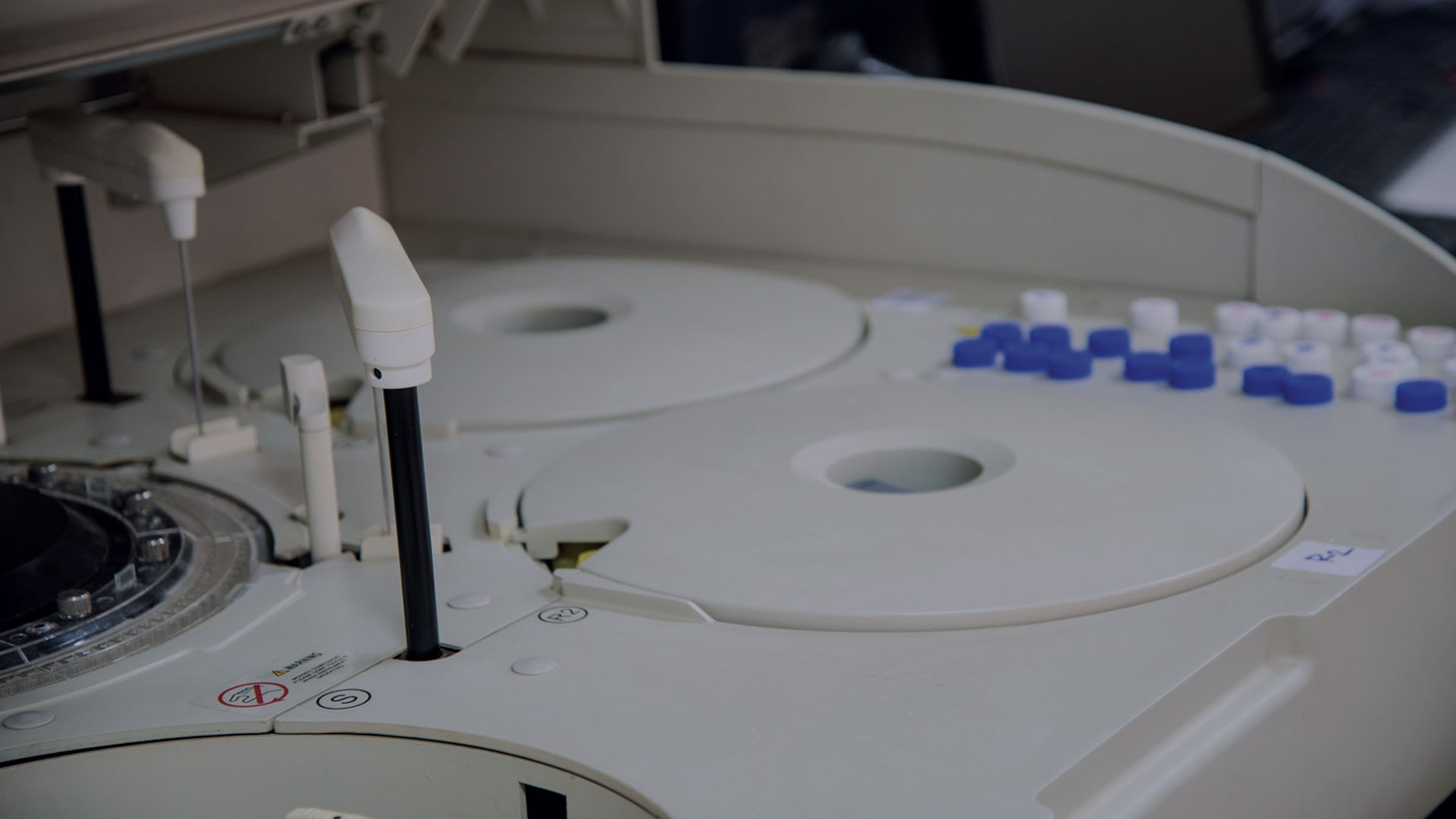
Laboratories across the South African mining value chain.
- · A JSE-listed PGM producer
- · A major South African gold mining group
- · Independent commercial assay laboratories
Named client references appear on this site only where written permission has been given.
The mining laboratory workflow.
MARS 6 / MARSXpress 2.0
Batch throughput for silicates, sulfides and oxides.
View product →BLADE
Sequential digestion for mixed matrices or per-sample methods.
View product →Phoenix
LOI on ores, industrial minerals and cement/refractory materials.
View product →MICAP-OES 1000
Verified gold assay performance; on-site core screening.
View product →U5000AT+ / UD5000AT+
Sub-ppt PGE, REE and actinide detection.
View product →Laser ablation (Iridia, Analyte G2, LSX-213 G2+)
Mineral deportment, mineral chemistry, trace element mapping, geochronology.
View product →ASX-series autosamplers
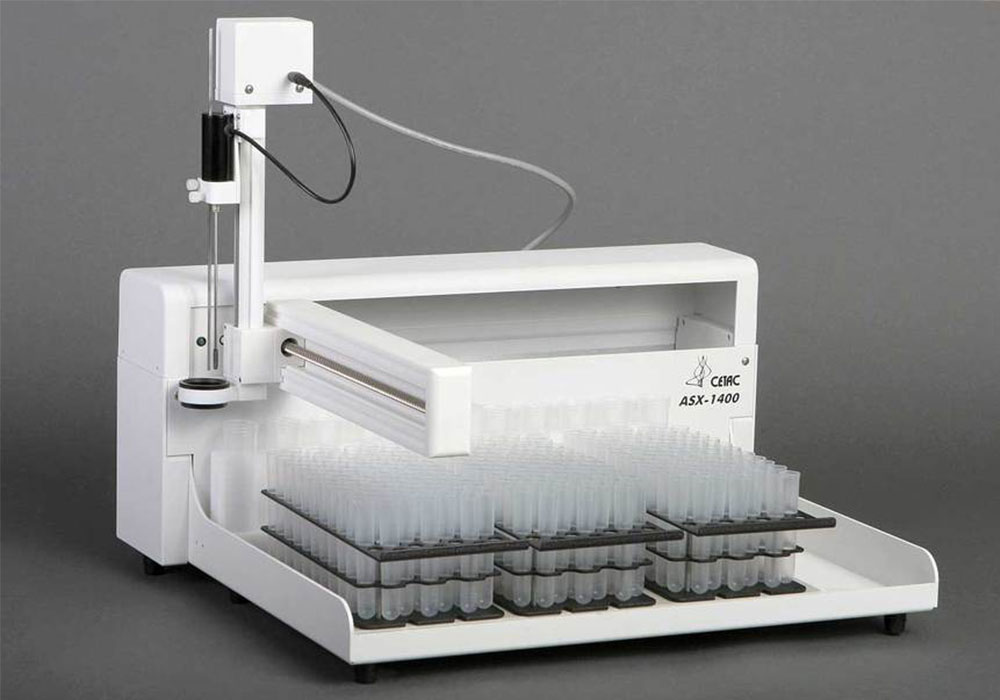
Unattended overnight runs for exploration-scale sample loads; XLR-860 for very large racks. ASX-1400/1600 for wear-metal analysis on mine equipment lubricating oils.
View product →Precision Glassblowing torches, nebulizers & spray chambers
For all ICP/ICP-MS instruments in the mine laboratory, regardless of manufacturer.
View product →Talk to our applications team about your matrix
Silicate, sulfide, PGM-bearing or catalyst — we'll recommend the right digestion and analysis path.
Request a demonstration