
MARS 6
The batch, multimode, closed-vessel microwave digestion system that converts up to 40 solid samples simultaneously into clear acid solutions for elemental analysis.
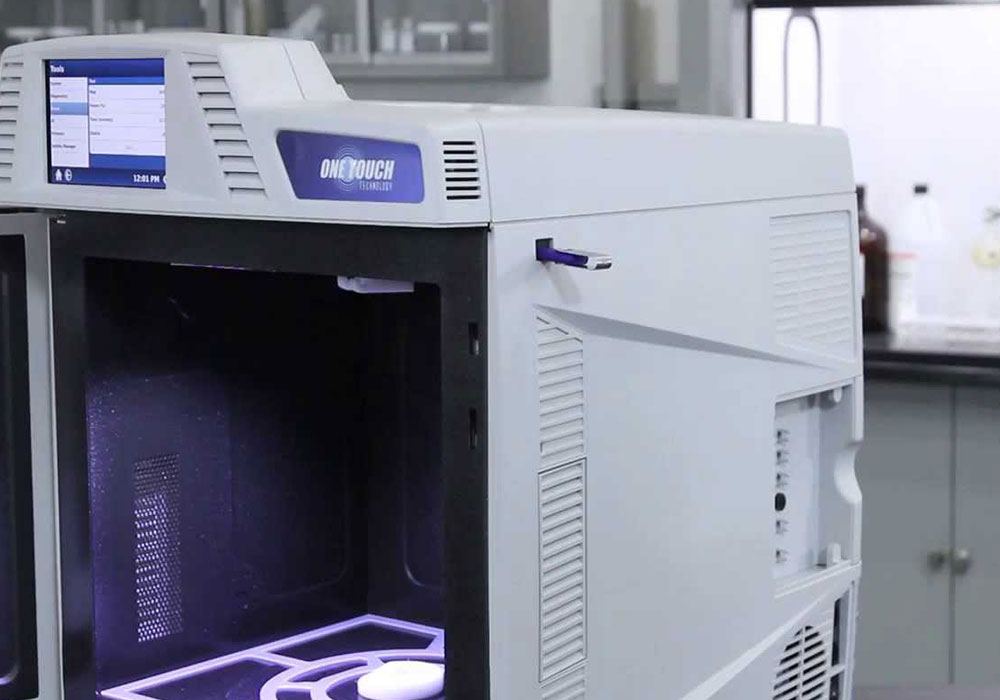
Built for high-volume laboratories.
Individual temperature measurement per vessel.
Automatic vessel recognition and counting; PowerMAX™ power control.
Large acid-resistant touchscreen with onboard software — no external PC required.
Configurable for either, with a library of pre-programmed methods.
To a safe removal temperature, using iPrep vessels.
The most broadly applicable instrument in the catalogue.
Silicate rocks (with HF), sulfide ores, chromite, PGM-bearing materials, soil, sediment, mine tailings.
Soil, sediment, sludge, surface water, groundwater, effluent, leachate, biota.
Grain, flour, meat, dairy, infant formula, beverages, animal feed.
Tablets, capsules, powders, excipients, packaging — ICH Q3D / USP <232>/<233>.
Oil, fuel, catalyst, lubricants, coal; trace metals for safety compliance.
Alloys, ceramics, electronic components, battery components, cosmetics, personal care and cleaning products.
The methods this system is designed to satisfy.
MARSXpress 2.0, the simplified batch system in the same product line, is explicitly built to meet DIN and European Norm method requirements.
Where the MARS 6 is put to work.
When to choose the MARS 6 over BLADE.
The MARS 6's batch format is the highest-throughput option when samples share a similar matrix and can run under the same method. Where samples differ significantly — different matrices, masses or acid combinations — the BLADE sequential system digests each sample individually under its own method.
You run high volumes of similar-matrix samples in the same batch — the highest throughput per run.
Your daily intake is mixed matrices needing individual methods per sample.
Talk to our applications team about the MARS 6
Vessel selection, acid chemistry, and method transfer for your specific matrices.
| Hotplate | Hot Block | MARS 6 (closed vessel) | |
|---|---|---|---|
| Time | 2–8 hrs | 1–4 hrs | 20–45 min |
| Max temperature | ~120 °C | ~150 °C | 200–260 °C |
| Volatile retention | Poor | Poor | Excellent |
| Contamination risk | High | Moderate | Low |
| Acid consumption | High | Moderate | Low |
| Operator acid exposure | High | Moderate | Minimal |
| Complete digestion of refractory matrices | Often not achieved | Often not achieved | Achieved |
| Automatic per-sample documentation | No | No | Yes |
| Vessel | Volume | Notes |
|---|---|---|
| MARSXpress | 75 mL | CEM's most popular digestion vessel; three-part design |
| MARSXpress Plus | 110 mL | Larger volume variant |
| EasyPrep | 55 mL | |
| GreenChem | 30 mL | Lower acid volume option |
| iPrep | 10 mL | Micro-volume and low-solids samples |
| Xpress | 75 mL |
Questions we are asked about the MARS 6.
Acid selection depends on the matrix. Silicate rocks require hydrofluoric acid to attack the silicon-oxygen framework; PGM-bearing materials typically require aqua regia; most environmental and food matrices are digested with nitric acid, often combined with hydrogen peroxide or hydrochloric acid per EPA 3051A/3052/3015A. All CEM vessels are made from microwave-transparent, acid-resistant materials suited to this range of chemistries.
The MARS 6's batch format runs highest throughput when samples share a similar matrix and can be processed under the same method. Where samples differ significantly in matrix, mass or required acid combination, CEM's BLADE sequential system digests each sample individually under its own method and is the better fit.
The MARS 6 records temperature and pressure for every vessel in every run, producing audit evidence automatically as a by-product of normal operation — meeting the ISO/IEC 17025 requirement for demonstrable method control, not just a reported result.
Both are batch, multimode, closed-vessel systems from CEM. The MARSXpress 2.0 is the simplified, intelligent-operation variant, built explicitly to meet DIN and European Norm method requirements, while the MARS 6 is the higher-capacity workhorse for laboratories running up to 40 vessels at a time.
Yes. The MARS 6 is configurable for digestion, extraction, or both, with a library of pre-programmed methods covering each mode.
The workflow around the MARS 6.
BLADE
CEM's automated sequential microwave digestion system — described by CEM as the world's fastest. Each sample digested individually, under its own method, at approximately 5 minutes per sample.
View product →MARSXpress 2.0
Batch microwave digestion with AI-assisted operation — up to 40 samples simultaneously, built to DIN and European Norm standards, for laboratories that need reliable throughput without deep microwave chemistry expertise.
View product →Phoenix BLACK
A microwave muffle furnace for ashing, loss on ignition, and sulfated ashing — the same result as a conventional furnace, up to 10× faster, with no requirement to leave a furnace running hot all day.
View product →Autosamplers & Automation
Unattended sample delivery from micro-volume to extended-rack high-throughput — standard, flowing-rinse, stirring and rapid-introduction configurations.
View product →Vessels, Liners & Consumables
The annuity supply that keeps MAD's installed base running — digestion vessels, seals, tubing and proteomics sample preparation, in local stock.
View product →MICAP-OES 1000
Simultaneous multi-element determination in prepared solutions — without argon, without a chiller, at a fraction of conventional ICP-OES running cost.
View product →